

Transhumanism
Transhumanism A Maniacal Mechanism
AMERICAN PILLARS
American Pillars
10/23/20254 min read

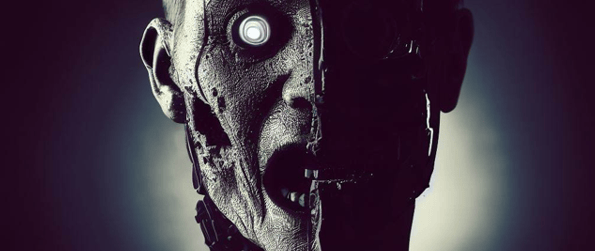
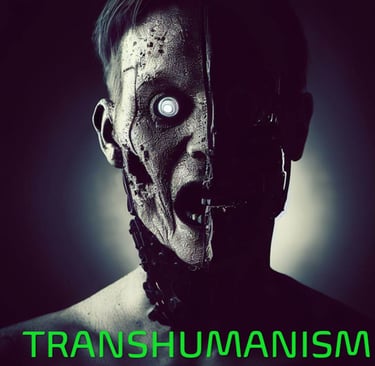
Transhumanism
A Maniacal Mechanism
We stand at a critical juncture, a moment where the very definition of what it means to be human is being challenged, not by external aggressors, but from within the heart of our own civilization. A new age philosophy, masquerading as progress and enlightenment, is gaining traction, one that I believe poses a profound threat to the foundational truths we hold dear. I speak of radical transhumanism, an ideology that, in its relentless pursuit of overcoming human limitations, risks unmaking us entirely, turning us into something less than we were created to be and transforms science into its own cult-like religion.
This is not merely a debate about technology; it is a spiritual battle for the soul of humanity, a battle that echoes the ancient struggle between the Creator and the created. As a follower of Christ, I am compelled to speak out against this emerging darkness, one that I see as fundamentally antithetical to the spirit of mankind, made in the very image of God.
The scriptures are clear: “God created man in his own image, in the image of God he created him; male and female he created them” (Genesis 1:27). This is not a mere biological description; it is a profound theological statement. It means that we are endowed with a divine spark, a capacity for reason, love, and creativity that reflects the nature of our Creator. It means we are inherently valuable, not because of our accomplishments or our capabilities, but because of our origin.
Furthermore, the Psalmist David declared, "For you created my inmost being; you knit me together in my mother’s womb. I praise you because I am fearfully and wonderfully made; your works are wonderful, I know that full well" (Psalm 139:13-14). This intimate, personal creation, occurring before our birth, speaks to God's deliberate and loving design. It signifies that perfection, in its truest and most meaningful sense, is not something we must engineer, but something that is already present in God’s design for us. Our very existence, from conception, is a testament to His profound knowledge and care.
Transhumanism, however, rejects this foundational understanding of our being. It operates from a premise of inherent imperfection, viewing human biology as a flawed blueprint to be corrected, augmented, or even replaced. While the desire to alleviate suffering and extend life is understandable, the radical conclusion that we must transcend our humanity to achieve it is deeply troubling. It suggests a dissatisfaction, even a contempt, for the very essence of what it means to be human, a precious gift from God.
This ideology, in its relentless pursuit of what it calls "progress," often spills over into a dangerous form of nihilism. If we are merely biological machines to be upgraded, then what is the inherent value of a human life? If we can engineer our own evolution, then what need is there for faith, for divine guidance, for the moral framework that has guided humanity for millennia? Transhumanism, by seeking to eliminate what it perceives as limitations – including mortality, suffering, and even the inherent unpredictability of human experience – risks severing our connection to the sacred. It fosters a sense of hopelessness, not by acknowledging our frailties and finding solace and strength in God, but by suggesting that our only hope lies in erasing the very things that make us human.
Consider the implications of attempting to "perfect" ourselves through technological means. Who defines perfection? Whose values will guide these augmentations? History is replete with examples of human attempts to create utopian societies, often resulting in disastrous outcomes. The ambition to redesign humanity on a grand scale, guided by fallible human intellect apart from divine wisdom, is a perilous path. It bypasses God's perfect design and His loving provision for us, leading us down a road of self-deification that inevitably ends in ruin.
The spirit of mankind, as created by God, is characterized by a beautiful tapestry of strengths and weaknesses. It is in our struggles, our vulnerabilities, and our capacity for love and redemption that we most closely reflect the divine. To seek to eradicate these aspects is to flatten the human experience, to strip away the very elements that allow for growth, compassion, and ultimately, salvation.
The Apostle Paul warned against such prideful ambition. In 1 Corinthians 1:20, he asks, "Where is the wise person? Where is the teacher of the law? Where is the philosopher of this age? Has not God made foolish the wisdom of the world?" The wisdom of the world, in its technological hubris, often overlooks the deeper truths revealed by God. Transhumanism, in its quest to outdo God's creation, risks falling into this very folly.
This battle for Western Civilization, and indeed for the soul of humanity, is not about rejecting beneficial technologies or turning our backs on progress. It is about discerning the ethical and spiritual implications of these advancements. It is about upholding the sanctity of life, recognizing our inherent dignity as beings made in God's image, and understanding that true fulfillment is found not in transcending our humanity, but in embracing it, flaws and all, and seeking to live in accordance with the divine will.
Radical transhumanism, at its core, is an anti-human agenda. It seeks to replace the imperfect, yet divinely created human with a manufactured, ostensibly superior entity. This is a vision that breeds despair, not hope, because it denies the very essence of our being and the loving Creator who fashioned us.
As we navigate these complex times, let us hold fast to the truth that we are fearfully and wonderfully made. Let us reject the siren song of radical transhumanism, which promises a future of godless self-creation, and instead, recommit ourselves to the timeless wisdom and eternal love of our Creator. The fight for the future of humanity is, and always will be, a fight for the recognition of our divine origin and purpose. Let us stand firm, not in our own technological prowess, but in the unshakeable foundation of God’s perfect design.