

The Wolf Behind The Handshake
Man is Wolf to Man
REFLECTIONSCULTURE WARCULTUREBEAUTY & ORDEREMPIRE & COLLAPSEWISDOM & TRADITIONFAITH IN ACTION
Contra Modernum
11/9/20253 min read


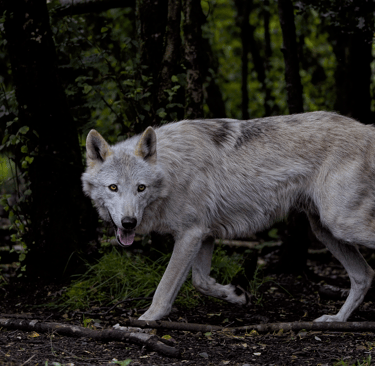
The Wolf Behind the Handshake
“Lupus est homo homini, non homo, quom qualis sit non novit.”
A man is a wolf to another man, not a man, when he does not know what sort he is. — Plautus, Asinaria, c. 195 BC
The old Romans did not waste words.
They saw the world for what it was, a marketplace of predators disguised as neighbors.
I thought about that line the other week, sitting in yet another meeting that felt more like a hunt than a discussion.
Smiles. Nods. Promises.
Everyone pretending we were all on the same side.
But you could feel it, the circling.
Everyone gauging strength, advantage, leverage.
Each sentence tested for weakness.
We like to imagine civilization tamed us. It did not.
It just taught the wolves to wear collars.
The Romans knew it two thousand years ago.
You do not really see a man until you see what he wants.
And until you know what he wants, you had better assume his teeth are sharp.
It is not cynicism. It is survival.
The world runs on hidden appetites: status, control, comfort, validation.
And the more polished the person, the more skillfully they hide the hunger.
You see it in business, in politics, in the church pews.
We smile. We shake hands. We talk about teamwork and trust.
But every instinct in us still measures distance, posture, tone, intent.
Some call it networking.
The Romans called it the law of nature.
A man is a wolf to another man when he does not know what sort he is.
Meaning: ignorance invites danger.
If you do not know what kind of man stands before you, what drives him, what restrains him, you had better not assume he is civilized.
Because the thin line between decency and savagery is not education or etiquette.
It is moral recognition.
Knowing another person’s nature, knowing your own.
Without that, every encounter becomes a test of dominance.
Without that, every stranger becomes potential prey.
We talk a lot about empathy now, as though it is something sentimental.
But the ancients knew empathy was practical; it kept you alive.
To see another man truly, to understand what sort he is, was to know whether he meant you harm.
And to see yourself clearly was to know whether you meant him harm.
I have watched it happen my whole career.
The projects that implode are never undone by the design, the math, or the system.
They collapse because one man forgot that other men are not machines.
He treated them as tools.
And the wolves came out.
The Romans were realists.
They believed trust was earned slowly, kept carefully, and never offered blindly.
You did not give your back to a man until you had seen what he did when no one was watching.
And maybe that is the problem with our time.
We have replaced discernment with slogans.
We tell each other to believe in people, as though belief makes anyone trustworthy.
We confuse politeness for goodness.
But the wolf smiles too.
The wolf holds the door.
The wolf sends the follow-up email.
Plautus was not saying all men are beasts.
He was saying men become beasts when they refuse to know or be known.
When we reduce each other to roles, labels, and transactions.
When we stop caring what sort of souls we are dealing with.
And that is the tragedy of a world that calls itself connected.
We have never known each other less.
I used to think mistrust was cynicism.
Now I see it as realism wrapped in humility.
Not all men are wolves.
But the ones who are will always count on your naïveté.
So I watch.
I listen.
I wait before trusting.
I learn what sort of man stands before me and what sort I am becoming.
Because when men forget that knowledge, the office becomes a forest again.
And the hunt begins anew.
Civilization did not kill the wolf in man.
It only taught him to wear shoes and carry a briefcase.