
The Siege of Silicon
Why the Dutch Were Right—and Why the East Will Never Understand It
REFLECTIONSCULTURE WARCULTUREBEAUTY & ORDEREMPIRE & COLLAPSEWISDOM & TRADITIONFAITH IN ACTION
Contra Modernum
10/12/20252 min read

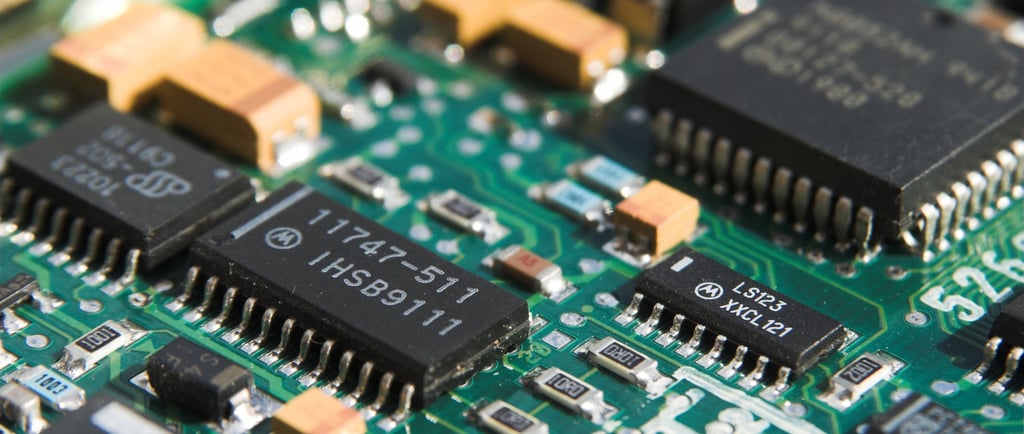
Today (October 12, 2025) the Dutch—those pragmatic Calvinist merchants who once sold the world tulips at the price of gold—finally grew a spine. They did the unthinkable in our age of limp-wristed globalization: they confiscated something. They seized Nexperia, a Dutch chipmaker owned by China’s Wingtech, invoking the ancient right of nations to defend themselves from infiltration disguised as trade. It was not elegant diplomacy. It was not “inclusive.” It was, simply, right.
Predictably, the mandarins of Wingtech wailed about “discrimination” and “politicization.” How touching. A state-run enterprise—operating under the watchful eye of a regime that treats intellectual property like a buffet and freedom like a disease—crying about fairness. The irony could power Amsterdam’s windmills for a decade.
Let’s be clear: the Chinese concept of “fairness” is a fiction, a linguistic performance crafted to pacify the gullible Western bureaucrat who still believes that smiling men in suits quoting Confucius are the heirs of reason and harmony. No—they are the heirs of Legalism, a philosophy that glorifies obedience and punishment. The West invented the concept of moral law; the East perfected the art of moral camouflage.
The Judeo-Christian tradition—whether one likes it or not—is the only civilizational framework that ever produced a conscience strong enough to restrain power. It made tyrants blush. It made kings kneel before priests. It made nations believe that justice was not what was useful, but what was right. The Far East, by contrast, birthed a culture of order without truth, of hierarchy without humility. The “Mandate of Heaven” is a celestial rubber stamp for whoever wins the next power struggle.
Now, marry that mindset with industrial espionage, centralized surveillance, and an ideology that views privacy as an obstacle—and you get modern China: a techno-authoritarian empire wrapped in the trappings of commerce. They build not to free men, but to control them more efficiently. And when they buy your factories, your chip fabs, your ports, they are not “investing”—they are infiltrating.
Islam, for its part, shares the same contempt for moral reciprocity. It reveres submission, not conscience; domination, not dialogue. In both the Islamic and Chinese spheres, virtue is not intrinsic—it is positional. You are “good” if you obey. You are “evil” if you dissent. A perfect mirror image of the moral inversion now infecting Western universities, where obedience to ideology replaces the pursuit of truth.
That is why this Dutch action matters. It is not just a national security story—it is a theological one. A civilization that believes all cultures are morally equivalent is already conquered. The Chinese don’t believe that. The Islamists don’t believe that. Only the postmodern Westerner believes that moral surrender is sophistication.
The seizure of Nexperia is a spark of sanity in a continent otherwise drunk on self-loathing. The bureaucrats will pretend it was a technical decision; it wasn’t. It was instinct—ancestral instinct. Somewhere in the marrow of the Dutch state still lives the memory of defending dikes against the sea, of choosing survival over civility.
And that is precisely what the West must relearn: that survival is moral. That defending your civilization from predators is not xenophobia, it is gratitude—for your ancestors, your faith, your children. The Chinese will call it “provocative.” The imams will call it “arrogant.” The Davos class will call it “regressive.” But that’s how you know it’s working.
Because the only thing more dangerous than the Chinese buying your semiconductor plants is your own elites selling them your soul.