
The Invisible Minority
How New England betrayed it's own revolution.
REFLECTIONSCULTURE WARCULTUREBEAUTY & ORDEREMPIRE & COLLAPSEWISDOM & TRADITIONFAITH IN ACTION
Contra Modernum
10/16/20254 min read

THE INVISIBLE MINORITY
HOW NEW ENGLAND BETRAYED ITS OWN REVOLUTION
The cradle of the American Revolution has become the coffin of its spirit.
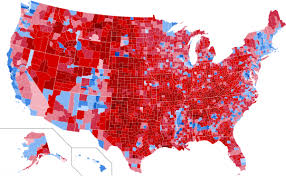
New England, the land of Lexington, Concord, and the Boston Tea Party, now boasts a political landscape so grotesquely distorted that nearly two out of every five citizens have no representative voice in Congress. Forty percent of voters in the region consistently choose Republican candidates, yet not one sits in the House or Senate to speak for them.
A region once defined by rebellion against distant, unaccountable power now silently submits to it.
This is not democracy; it is a cartel of cities.
Boston, Providence, Hartford, New Haven, all gleaming citadels of bureaucratic self-regard, now dictate the political destiny of entire states. The urban core votes blue, and the rural man is buried under concrete ballots. His vote counts only as a statistic in a preordained ritual, a gesture of futility performed every election cycle to sanctify the illusion of “representation.”
The Founders feared the tyranny of the majority. What they could not have foreseen was the tyranny of the cluster, where geographic concentration, district gerrymandering, and demographic engineering converge to create an unbreakable one-party feudalism.
Every red district in New England is carved up like meat for the ideological butcher. The coastal bureaucrat dictates to the logger of Maine, the dairy farmer of Vermont, and the machinist in New Hampshire. These people pay the same taxes, obey the same laws, and send their sons to the same wars, yet they are denied a single voice in the chambers of government.
And we dare to call this “representation.”
The ruling class of New England does not wear powdered wigs or carry muskets. They wear Patagonia vests and carry iPhones. Their revolution is not for liberty but for control. They hold “town halls” that resemble sermons, not dialogues, where dissenting voices are met not with rebuttal but with cancellation.
This class believes itself the natural governor of all human affairs because it has mastered the dialect of bureaucratic virtue. They think themselves enlightened because they can recite the approved catechism of inclusivity and carbon neutrality. Yet this “enlightenment” masks a deep contempt for their fellow citizens, the men and women who still dare to believe that faith, family, and self-reliance matter more than climate pledges and gender pronouns.
What reigns over New England now is not democracy but technocratic aristocracy, a caste of credentialed urbanites who wield their moral superiority as a club against the half of their neighbors who still think like free men.
There is a cruel irony that this betrayal takes place in the very soil where men once fired the first shots for freedom.
Paul Revere’s ride would now be canceled for “inciting insurrection.” The Minutemen would be doxxed on social media. Sam Adams would be flagged as a “domestic extremist” for encouraging resistance to taxation.
The Revolution was born out of the conviction that no man should be ruled without representation. Yet in modern New England, this principle is quietly euthanized. Forty percent of the populace, enough to form a governing coalition in any sane democracy, has been rendered politically invisible through the machinery of urban domination and cultural conformity.
This is not progress. It is regression. It is monarchy in disguise, the coronation of the bureaucratic class under the banner of “democracy.”
The modern New Englander no longer worships God but the State.
Taxes are their tithes, regulations their sacraments, and elections their liturgy. But like all false religions, it offers no salvation, only control. The State provides everything but meaning. It educates their children into moral confusion, medicates their anxieties, and robs them of the dignity of labor through endless welfare masquerading as compassion.
The same people who once threw tea into Boston Harbor now line up obediently to pay taxes that fund the very bureaucracies that despise them. The spirit of liberty has been replaced by the comfort of submission.
The Republican of New England is not simply outvoted; he is exiled. He lives as a foreigner in his own country, a tolerated dissenter in the land his forefathers built. His views are “problematic.” His faith is “outdated.” His speech is “harmful.” His patriotism is “dangerous.”
He may own land, but he does not rule it. He may work the fields, but his harvest is tithed to fund the ideology of those who hate him. The media portrays him as an oddity, a relic, the “last conservative of Vermont” or the “Republican dairy farmer of Maine,” as if these men were archaeological artifacts from a lost civilization.
Yet it is they who still remember what freedom tasted like.
This imbalance reveals a deeper rot. The Founders built a federal system to protect regional voices from national homogenization. Yet what we see in New England is the complete collapse of that vision. Political diversity has been extinguished at the local level, leaving half the population disenfranchised and alienated.
When representation is monopolized, frustration turns to cynicism. Cynicism turns to apathy. And apathy is the fertile soil of tyranny.
The system that once balanced power between regions now rewards ideological purity. The republic is being replaced by a technocracy of belief, where faith in the dominant narrative determines whether one is permitted to participate in governance at all.
If there is to be another revolution in New England, it will not be fought with muskets but with courage, the courage to speak truth, to build parallel institutions, to reassert the sovereignty of faith and family over bureaucracy and abstraction.
Let the forgotten man of New England remember his heritage. Let him rebuild his own communities, his own schools, his own economies independent of the state that ignores him. Let him stop asking permission to be represented and start living as though he already is.
Freedom is not granted by ballots counted in Boston. It begins in the heart that refuses to bow.
New England, once the cradle of independence, is now its tomb.
The region that gave birth to the American experiment now administers its decline, smothering half its population under the polite tyranny of consensus. Forty percent of its people remain politically homeless, invisible in the very house their ancestors built.
It is the oldest story in the world: the revolution devours its children.
But it is also the oldest hope: that liberty, though buried, is never truly dead.
The fire that lit the lamps of Concord still smolders beneath the ash, waiting for men of courage to breathe it back to life.