

Happy Columbus Day
Reflections on Columbus Day, 2025
REFLECTIONSCULTURE WAR
Contra Modernum
10/13/20252 min read

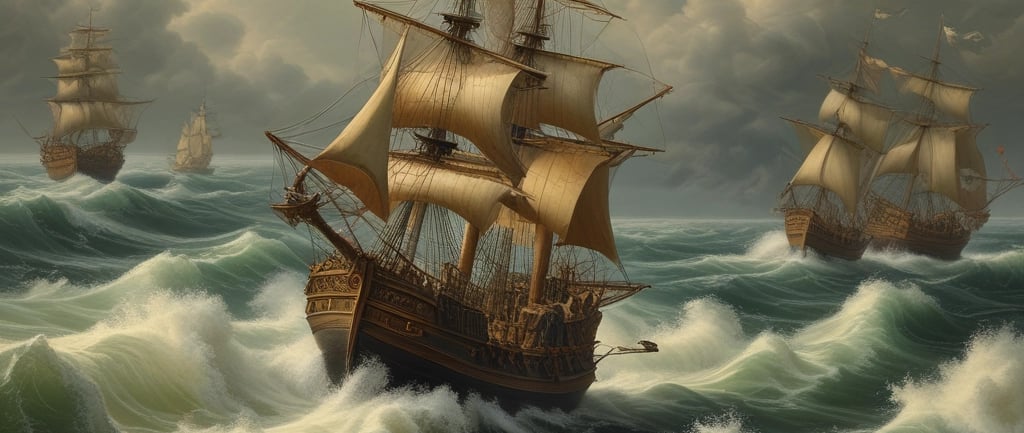
Every year on Columbus Day, the same ritual unfolds: the banners of the brave are torn down by the timid. We are told, with self-righteous sneers and sterile slogans, that Christopher Columbus was a villain, a conqueror, a colonizer—never a hero. Yet for all the fury of the mob, none of their self-flagellating zeal changes one unassailable truth: Columbus was one of the most audacious men in history.
This was no armchair dreamer, no cautious bureaucrat hiding behind safety and consensus. Columbus was a man who sailed off the edge of the map. In an age when most of the world hugged the coastline, he dared the open ocean—armed not with GPS and satellite forecasts, but with faith, courage, and a crude compass. He was willing to die for the pursuit of knowledge. That is not evil; that is the seed of civilization itself.
The left’s cartoon version of Columbus as a genocidal madman is not only false—it is cowardly. It is the kind of moral posturing that only a society too soft to face real danger can afford. Columbus was flawed, as every great man has been, but his flaws were those of excess, not absence—too much daring, not too little. To erase him is to teach our children that greatness itself is suspect.
History is not a morality play with perfect saints and irredeemable sinners. It is, as Plutarch wrote, the record of human souls in motion—of men whose virtues and vices together carve the shape of the world. To study Columbus as a symbol of courage, curiosity, and perseverance does not mean denying his faults; it means acknowledging that virtue and vice are often intertwined in the same human heart.
Cancel culture, by contrast, is the religion of the sterile. It worships the illusion of moral purity, a fantasy world where everyone from the past must conform to the delicate sensibilities of the present. It seeks not to understand, but to erase. It destroys our heroes and leaves us only victims.
Columbus was not perfect. But perfection is not the measure of greatness—courage is. Columbus risked everything on a dream that defied the cynics and reshaped the world. His voyages opened horizons that gave birth to new civilizations, scientific revolutions, and the modern age itself. He embodied the spirit of daring that built ships, crossed oceans, and reached the moon.
Children should learn of Columbus not as a plaster saint, nor as a cartoon villain, but as a man—a bold, flawed, magnificent man who reached beyond the known and changed history. To teach otherwise is to raise a generation allergic to risk, frightened of failure, and ashamed of ambition.
Let us then celebrate Columbus Day not as a monument to conquest, but as a festival of courage. Let it remind us that discovery requires audacity, that faith must sometimes sail against the wind, and that history belongs not to those who stay ashore and criticize, but to those who dare the unknown.
Like Plutarch’s heroes, Columbus stands as both warning and inspiration. From him, we learn that courage carries consequences, but cowardice builds nothing. And in a world ruled by fear and conformity, perhaps that lesson is more necessary now than ever.